Hydrogenoid and Oxygenoid Constitution in Homoeopath
Meaning of Constitutional Types
In homoeopathy, constitution means the overall pattern of a person—how the body reacts to environment, climate, food, emotions, and illness. Hydrogenoid and oxygenoid constitutions are two such broad types described to help doctors understand patient susceptibility and tendencies.
These are not diseases, but reaction patterns of the body.
Hydrogenoid Constitution – Basic Nature
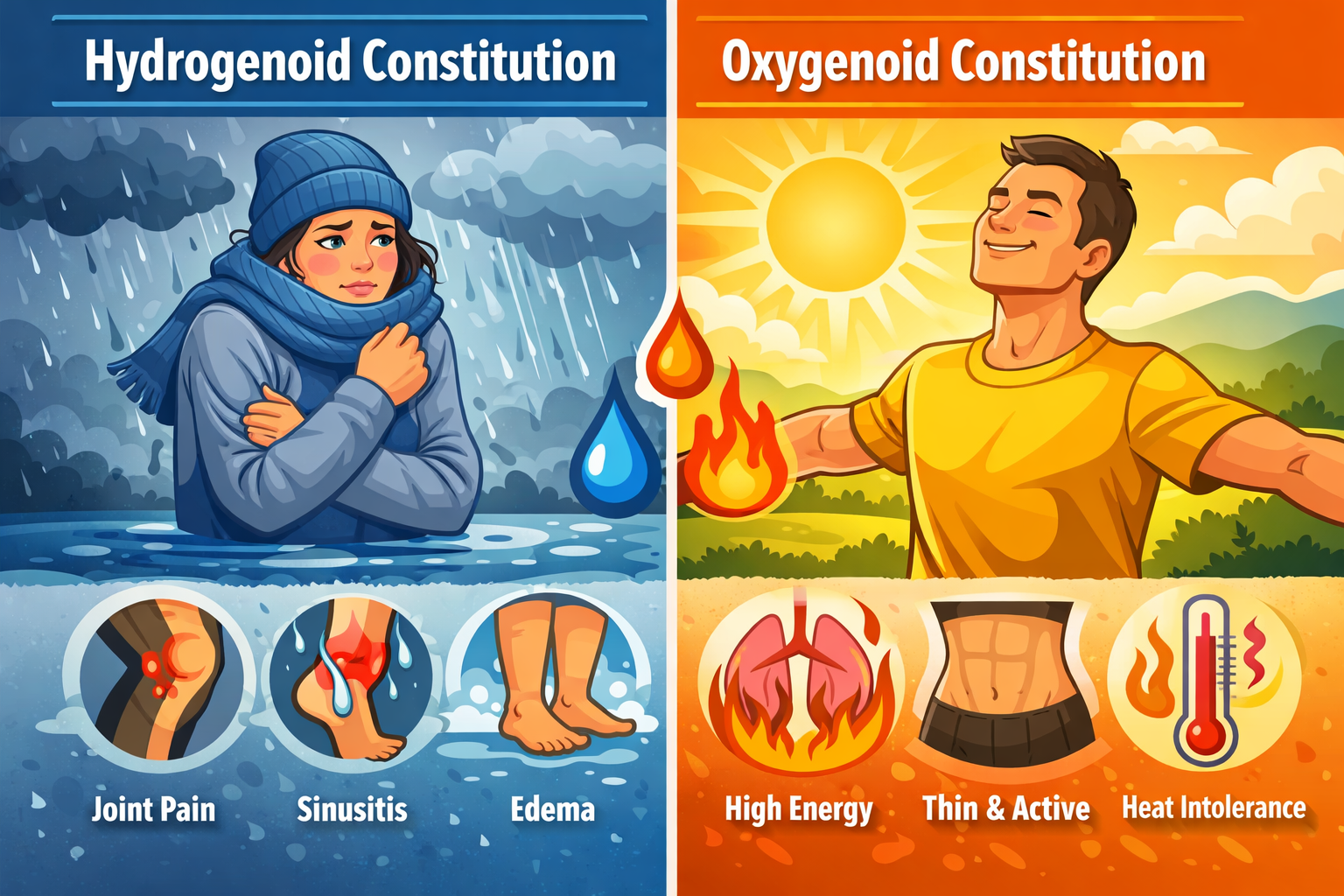
A hydrogenoid constitution is strongly influenced by water and dampness. Such patients are highly sensitive to moisture, rain, fog, and humid climate. Their complaints usually increase in damp weather and near water bodies.
Common Features
- Aggravation from damp, rainy, cold, and humid climate
- Complaints worsen during monsoon
- Tendency for catarrhal problems (cold, cough, sinus)
- Joint pains, skin issues, asthma may increase in moisture
- Excess sweating or water retention
- Patient often says: “Doctor, rain makes me worse”
Hydrogenoid patients usually feel better in dry and warm weather. Their body seems unable to tolerate excess moisture.
Oxygenoid Constitution – Basic Nature
Oxygenoid constitution represents a more active and reactive state. These patients need fresh air and feel better in open surroundings. They are generally energetic, restless, and sensitive to lack of oxygen or closed spaces.
Common Features
- Desire for fresh air, open windows
- Aggravation in closed, crowded, or suffocating rooms
- Better by deep breathing, open air, movement
- Active metabolism and quick reaction to disease
- Complaints may worsen from heat and stagnation
- Patient often says: “I feel better outside”
Oxygenoid patients usually do not like confinement and feel uncomfortable indoors.
How to Identify These Constitutions in Practice
Identification comes from careful case-taking. A doctor should focus on:
- Weather and climate aggravations
- Patient’s own words and repeated expressions
- Seasonal history of complaints
- Environmental sensitivity (water, air, room conditions)
Hydrogenoid patients repeatedly point toward dampness as the cause of suffering, while oxygenoid patients clearly express relief in open air and discomfort in closed places.
Importance for Homoeopathic Doctors
Understanding these constitutions helps in correct remedy selection and long-term cure. It reduces confusion, guides medicine choice, and improves treatment depth. Remedies like Natrum sulphuricum often suit hydrogenoid cases, while oxygenoid tendencies guide different remedy groups.
Constitutional understanding saves time, improves accuracy, and strengthens classical homoeopathic practice. Treating the constitution means treating the patient, not just the disease.
Thank you!!